

Oil Tanker Truck
Why Choose Us
With years of experience in the industry, has the expertise to provide reliable and durable solutions.
The company's products adhere to relevant industry certifications and compliance standards, ensuring safety and reliability.
The company is known for its innovative approach to designing and manufacturing trailers and related products.
Offers a wide range of trailers and related products to cater to various industries and applications.
What is Oil Tanker Truck
A fuel tank trailer as known as an oil tanker, gasoline tanker trailer, or petrol tanker. It is designed to carry liquefied goods, and liquid types that can be transported, such as petrol, gasoline, oil, water, etc. If you want to transport bitumen, you need bitumen tanker trailer.
-
![45000 Liters Fuel Tanker Trailer]() 45000 Liters Fuel Tanker TrailerLiquid tanks are used for transporting liquids such as fuel, water, chemicals, acids and alcohol etc. The tank material can be fiberglass, carbon steel, stainless steel, aluminum per customer...read more
45000 Liters Fuel Tanker TrailerLiquid tanks are used for transporting liquids such as fuel, water, chemicals, acids and alcohol etc. The tank material can be fiberglass, carbon steel, stainless steel, aluminum per customer...read more -
![3-Axle 45kL Fuel Tanker]() 3-Axle 45kL Fuel Tanker3-axle 45kL oil tanker 45000L capacity suitable for long-distance transportation of bulk oil like petroleum and diesel Equipped with 3×13T heavy-duty axles and famous brand components for stable...read more
3-Axle 45kL Fuel Tanker3-axle 45kL oil tanker 45000L capacity suitable for long-distance transportation of bulk oil like petroleum and diesel Equipped with 3×13T heavy-duty axles and famous brand components for stable...read more -
![42000 Litres Fuel Tanker Semi Trailer]() 42000 Litres Fuel Tanker Semi TrailerFuel tanker trailer is mainly used to transport petroleum products, also for kerosene, diesel oil, vegetable oil, cooking oil and coal tar and other substances. The fuel tank trailer body has...read more
42000 Litres Fuel Tanker Semi TrailerFuel tanker trailer is mainly used to transport petroleum products, also for kerosene, diesel oil, vegetable oil, cooking oil and coal tar and other substances. The fuel tank trailer body has...read more -
![4 Compartments Fuel Tanker Semi Trailer]()
-
![Stainless Steel Tank Trailer]() Stainless Steel Tank TrailerFuel tanker trailer is mainly used to transport petroleum products, also for kerosene, diesel oil, vegetable oil, cooking oil and coal tar and other substances. The fuel tank trailer body has...read more
Stainless Steel Tank TrailerFuel tanker trailer is mainly used to transport petroleum products, also for kerosene, diesel oil, vegetable oil, cooking oil and coal tar and other substances. The fuel tank trailer body has...read more -
![42000L Oil Tank Truck]() 42000L Oil Tank TruckShape: Monoblock cylinderread more
42000L Oil Tank TruckShape: Monoblock cylinderread more
Tare weight: 9000KG
Color: Customized
Volume: 40m³ customized


Fuel tanker truck capacity
Common fuel tanker truck capacity is 30,000-60,000 liters, 7925-15850 gallons, the following is the hot selling capacity:
30kl, 30,000 liters, 7925 gallons.
40kl, 40,000 liters, 10566 gallons.
45kl, 45,000 liters, 11887 gallons.
50kl, 50,000 liters, 13208 gallons.
60kl, 60,000 liters, 15850 gallons.
And more
Fuel tanker trailer dimension
30KL fuel tanker trailer dimensions: 9500*2500*3600 mm
40kl fuel tanker truck dimension: 10500*2500*3600 mm
45kl fuel tank truck dimension: 11000*2500*3600 mm
50kl fuel tanker trailer dimension:11500*2500*3600 mm
60kl tanker truck trailer dimension: 12500*2500*3600 mm

Features of Oil Tanker Truck

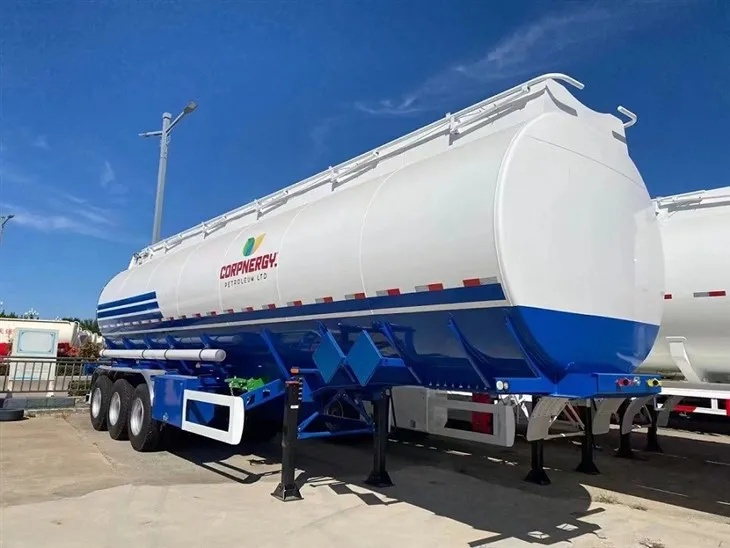


Storage Capacity: Oil tanker trucks are designed to carry large quantities of liquid fuel, such as gasoline or diesel. They have a robust tank with sufficient storage capacity to meet transportation demands.
Material Construction: The tanks of oil tanker trucks are typically made of high-strength steel or aluminum alloy to ensure the structural integrity and safety of the transported fuel.
Multiple Compartments: Some oil tanker trucks feature multiple compartments within the tank, allowing for the separation and safe transportation of different types of fuel or chemicals.
Pressure and Temperature Control: To ensure the stability of the transported fuel, these trucks are often equipped with systems to monitor and control pressure and temperature within the tank.
Safe and Secure: Oil tanker trucks are outfitted with safety features such as emergency shut-off valves, overfill prevention devices, and leak detection systems to prevent accidents and spills during transit.
Manoeuvrability and Stability: These trucks are designed with a heavy-duty suspension and appropriate wheelbase to ensure stability while transporting heavy loads and to handle curves and turns safely.
DOT Compliance: Oil tanker trucks must comply with the regulations set forth by the Department of Transportation (DOT) regarding safety, operation, and maintenance standards.
Efficient Fuel Consumption: Modern oil tanker trucks are engineered to optimize fuel consumption during operation, reducing costs and environmental impact.
Easy Loading and Unloading: The trucks are equipped with nozzles, hoses, and other accessories that facilitate efficient loading and unloading of fuel at filling stations or depots.
Regular Maintenance: Proper maintenance and regular inspections are crucial to ensure the performance and safety of oil tanker trucks, including checking the integrity of the tank, fuel lines, and safety equipment.

Types of Oil Tanker Truck
Flat Bottom Tankers: Features a flat bottom and are commonly used for transporting lighter liquids such as gasoline and diesel.
Chemical Tankers: Constructed with materials resistant to chemical corrosion to safely carry acids, bases, and other chemicals.
Petroleum Tankers: Specifically designed to transport crude oil, refined fuels, and other petroleum products.
Cone Bottom Tankers
Designed with a conical base, ideal for emptying the tank completely, especially when dealing with heavy or viscous fluids.
Food Grade Tankers
Made with materials and designs that comply with food safety regulations, used for transporting edible oils, milk, beverages, and other food products.
Multiple Compartment Tankers
Also known as tri-axle or multi-axle tankers, these trucks have multiple compartments to transport several different liquids simultaneously, each with its own storage area.
Insulated Tankers
Equipped with insulation to maintain the temperature of the product inside, suitable for transporting temperature-sensitive fuels like liquefied natural gas (LNG).
A typical oil tanker truck has the following dimensions
Length: Oil tanker trucks generally have a length ranging from 35 to 50 feet. This allows them to accommodate a significant amount of oil without compromising safety and maneuverability.
Width: The average width of an oil tanker truck is around 8 to 9 feet. This ensures that the truck remains within standard road width regulations and can navigate through different traffic conditions smoothly.
Height: The height of these trucks varies but typically ranges between 11 to 12 feet. This height is essential to provide enough clearance for bridges and overpasses along the truck's route.
Capacity: Oil tanker trucks come in various sizes, but a common capacity range is between 5,000 to 10,000 gallons. These trucks are designed to transport substantial amounts of oil efficiently while adhering to weight restrictions imposed by local regulations.
Weight: The weight of an oil tanker truck largely depends on its capacity and overall design. On average, these trucks weigh around 33,000 to 80,000 pounds, including the weight of the oil being transported.
Axle Configuration: Oil tanker trucks typically have multiple axles to distribute the weight evenly and improve stability. The most common configuration is the 4-axle arrangement, providing sufficient support for the weight of the oil cargo.
Turning Radius: Due to their size, oil tanker trucks require a larger turning radius compared to conventional vehicles. The turning radius can vary, but generally, these trucks need relatively wide turning spaces to navigate safely in urban areas and tight corners.
Safety Features: Oil tanker trucks are equipped with safety features such as anti-roll devices, emergency shut-off valves, and spill prevention systems. These measures are crucial to mitigate the risks associated with transporting hazardous materials like oil.
What kind of fuel efficiency can I expect from an oil tanker truck
Fuel efficiency in oil tanker trucks varies widely based on several factors, including the size and weight of the vehicle, the aerodynamics of the design, the age of the engine, the type of fuel used, the driving habits, and road conditions.
Eco-Driving Features: Some newer trucks are equipped with eco-driving aids that can optimize gear shifting and engine performance for better fuel economy.
Vehicle Size and Weight: Larger and heavier oil tanker trucks typically have lower fuel efficiency because they require more energy to move.
Engine Technology: Modern engines with advanced technologies such as turbochargers, direct injection, and improved exhaust after-treatment systems can offer better fuel economy.
Aerodynamics: Streamlined designs that reduce wind resistance can improve fuel efficiency by lowering the amount of energy needed to maintain speed.
Tire Management: Properly inflated tires with less rolling resistance can enhance fuel efficiency.
Driving Behavior: Smooth driving, maintaining consistent speeds, and avoiding rapid acceleration or braking can positively impact fuel efficiency.
Route Optimization: Efficient routes that minimize hills and detours can lead to better fuel economy.
Regular Maintenance: Regular service and maintenance of the engine and other components can help maintain fuel efficiency by ensuring optimal performance.
Fuel Quality: Using high-quality fuel with appropriate additives can sometimes improve fuel economy.
Speed Management: Operating within optimal speed ranges can improve fuel efficiency since fuel consumption increases significantly at high speeds.
Tank Design: The tank should be constructed with high-quality materials, such as stainless steel, to prevent corrosion and leakage. It should also have a pressure-relief system to regulate pressure changes during loading, unloading, and transit.
Non-Slip Surfaces: The tanker should have non-slip surfaces on its platforms, catwalks, and ladder rungs to prevent slips and falls, especially in wet or oily conditions.
Emergency Shut-Off Valve: An emergency shut-off valve, also known as a quick-closing valve, should be installed near the tank outlet. This valve allows for the immediate closure of the tank in the event of an accident or a leak.
Rollover Protection: The oil tanker should be equipped with rollover protection features, such as anti-rollover bars and stability control systems. These features help prevent the vehicle from overturning during sudden maneuvers or in challenging road conditions.
Anti-Skid Braking System (ABS): An ABS helps maintain steering control and prevents wheel lock-up during braking. It is an essential safety feature that improves stopping power while reducing the risk of jackknifing or skidding.
Spill Containment Measures: The truck should have spill containment measures in place, such as drip pans, to safeguard against potential leaks or spills during loading, unloading, or accidents. These measures help prevent environmental contamination and comply with regulations.
Fire Suppression System: An effective fire suppression system with automatic detection and suppression capabilities is crucial in case of a fire outbreak. It should have both manual and automatic activation methods and be designed to protect the tank and surrounding areas.
Overfill Protection: Overfill protection systems prevent the tank from being overfilled, which can lead to spillage and potential accidents. These systems use sensors to monitor the tank's level and automatically shut off the flow of oil when maximum capacity is reached.
Adequate Warning Signs and Labels: Clear and legible warning signs and labels should be present on the tanker, indicating the nature of the cargo, hazard information, emergency contact numbers, and any other relevant warnings or precautions.
Safety Training: Apart from the truck's physical features, it is essential to ensure that the drivers are well-trained in handling hazardous materials, emergency procedures, and defensive driving techniques. Regular safety training and awareness programs contribute significantly to avoiding accidents.
How does an oil tanker truck need maintenance?
Inspection of Tank and Lines: Periodic inspections of the tanker itself and the pipelines to ensure integrity and to prevent leaks or corrosion.
Pre-Trip Inspections
Conducted daily before operation to check key components like tires, lights, brakes, and fluid levels.
Engine Oil and Filter Change
Typically recommended every 10,000 to 15,000 miles or according to the oil change interval specified by the manufacturer.
Lubrication Service
Grease points should be lubricated according to the vehicle's schedule, usually every 5,000 miles or so.
Brake Inspection and Service
Brakes should be inspected regularly and professionally serviced as needed, often every 30,000 to 60,000 miles.
Tires
Tires should be inspected regularly for wear and proper inflation and rotated according to the manufacturer's recommendations, typically every 10,000 to 20,000 miles.
Transmission and Differential Services
Fluid changes for these components are usually needed every 50,000 to 100,000 miles.
Emissions System Check
Depending on the region, this may be required annually or every two years to ensure compliance with environmental standards.
Annual Inspection
A comprehensive inspection is often required annually to check for any potential issues that could affect safety and compliance.
Major Services
Every 120,000 to 180,000 miles, a more extensive maintenance service is recommended, which may include replacing the fuel filter, air filters, and other critical components.
Familiarize yourself with the relevant regulations: Stay up-to-date with the environmental regulations that apply to your industry. Understand the specific requirements and obligations outlined in these regulations.
Conduct regular audits and inspections: Regularly assess your operations, facilities, and equipment to identify any potential environmental risks or non-compliance issues. This will help you address concerns promptly and implement corrective actions.
Establish standard operating procedures (SOPs): Develop and document SOPs that outline environmentally-friendly practices. These procedures should cover waste management, pollution control, energy efficiency, and other relevant areas. Train employees to follow these SOPs consistently.
Monitor and manage waste properly: Implement efficient waste management systems to handle hazardous and non-hazardous waste. Ensure proper storage, labeling, transportation, and disposal of waste materials in compliance with applicable regulations.
Reduce energy and resource consumption: Implement initiatives to minimize energy usage and conserve natural resources. This may include utilizing energy-efficient appliances and technologies, optimizing production processes, and promoting recycling and reuse practices.
Promote employee awareness and involvement: Educate employees about environmental regulations and their individual responsibilities in achieving compliance. Encourage their active participation in environmental programs and initiatives.
Maintain accurate record-keeping: Keep detailed records of environmental compliance activities, such as permits, licenses, inspections, and training sessions. This documentation will be essential for demonstrating compliance during audits or legal proceedings.
Engage with regulatory authorities and experts: Establish a constructive relationship with environmental regulatory agencies and seek guidance or clarifications when needed. Consider involving environmental experts or consultants to ensure you are implementing the best practices.
Stay updated with technology and best practices: Continuously improve your environmental management systems by monitoring new technologies, best practices, and industry standards. Adopt innovative solutions whenever feasible to enhance compliance
Respond promptly to incidents and emergencies: Develop an emergency response plan to mitigate and manage potential environmental emergencies or incidents. This plan should include procedures for spill response, fire control, and evacuation if needed.
Our factory has a strong technical force, sophisticated manufacturing equipment, professional production team, for product innovation, research and development, quality assurance to provide a solid backing. The company has a full set of advanced equipment and perfect testing system to produce products that meet customer requirements. Customers can enjoy a great buying experience from our professional sales team.

FAQ
As one of the leading oil tanker truck manufacturers in China, we warmly welcome you to buy high-grade oil tanker truck for sale here from our factory. All our products are with high quality and competitive price.
Stainless Steel Tank Trailer, Oil Tanker Truck, 42000L Oil Tank Truck